
Is Donald Trump the Antichrist?
The rise of interest in determining if Donald Trump is the Antichrist has created an ongoing controversy. Biblical Prophecy, Political Influence, Conspiracy Theory and Public Perception will be examined as a way to understand this emerging trend; including both criticisms of Trump and Christian views on this issue. How Religious Beliefs, Politics and Media Speculation are continuing to shape one of today's most talked about controversies will also be discussed.
5/8/20265 min read

Why This Question Continues to Come Up
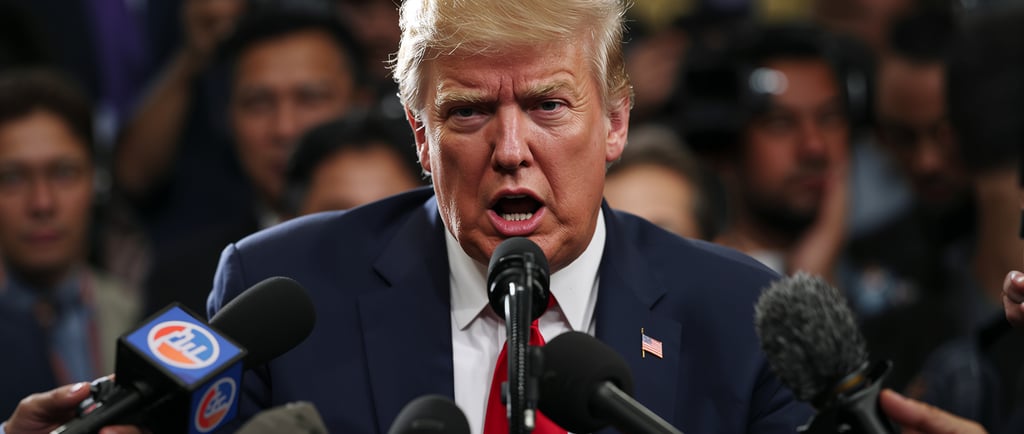
There are few politicians today, besides perhaps Hillary Clinton, who have elicited such strong devotion, ire, suspicion, and debate as Donald Trump. His supporters see him as a crusader against corruption, globalism, and elitist politics. The detractors see him as a divider, a deceiver, and a danger. And due to this intense emotional response toward him, a number of evangelical writers have raised an intriguing question: is Donald Trump the Antichrist?
The idea isn't entirely new. There have been countless times in history where people have referred to controversial leaders as the Antichrist. These included Napoleon, Hitler, Stalin, and numerous popes, kings and presidents. With each wave of societal fear and confusion (or at least perceived fear) or political polarization, the Bible's prophecies often enter public discourse.
But labeling anyone alive as the Antichrist is serious business. It would be helpful to understand what the Bible really states concerning the Antichrist prior to drawing any conclusions.
What Does the Bible State Concerning the Antichrist?
The majority of references to "the Antichrist" appear in the New Testament Epistles of John. In those passages, the word is used to describe people who deny Christ and/or are spreading deception. But many Christians also equate the concept with other prophetic figures described in Daniel, 2 Thessalonians and Revelation.
Historically traditional views depict the Antichrist as a charismatic leader that will gain incredible power over humanity, deceive nations, require absolute loyalty, and oppose God while pretending to be a savior figure. Other interpretations also suggest he will manipulate economies through deceitful means; make impressive speeches; create a false sense of peace; and receive widespread admiration by the general public.
Since biblical prophecy includes symbolic elements, there is disagreement among Christians regarding how literally we should interpret the descriptive accounts of the Antichrist. Some believe the Antichrist will represent one future individual. Others believe that the term is a reference to corrupt systems; or empires; or to recurring patterns of sin throughout all of human history.
Why Some Think Trump Fits the Description
Critics who draw a comparison between Trump and the Antichrist typically refer to Trump's personality; his influence; and public actions rather than direct scriptural support.
One rationale for this connection is based upon charisma and loyalty. Trump elicits a fervent dedication to him among his supporters -- some of whom treat him as if he was uniquely chosen to save America. Critics believe that level of loyalty resembles the type of political worship cautioned against in prophetic scripture.
Others point to Trump's manner of communication. Trump regularly uses bombastic language, slanders his opponents, exaggerates accomplishments and receives extensive coverage in the media. Some Christians view this rhetorical style as boastful or deceptive -- qualities which they equate with cautionary biblical references to corrupt leaders.
An additional rationale is based upon increased polarization. Trump's presidency heightened division within society across lines of politics, culture, and religion. To some observers, this fragmentation seems to carry profound spiritual implications.
Online conspiracy theories have also helped foster speculation. Videos and articles have been produced which demonstrate apparent connections between Trump and prophetic scripture; numerology; or prophetic statements. While many of these examples depend upon selective interpretation; suspect mathematics; or unsubstantiated assumptions, none of these examples establish conclusively that Trump is the Antichrist. Rather, they illustrate symbolisms which critics view through their own religio-political lens.
Why Many Conservatives Refuse to Believe Him to Be
Many conservative Christians vigorously dismiss the notion that Trump is the Antichrist. Some supported him on account of pro-life policies; religious freedom issues; his judicial appointments; and/or border security. Thus, in their view, Trump defended Christian values rather than opposed them.
Many others refuse to accept accusations because they believe prophecy should be approached with great care. They contend that history has been filled with failed prophetic declarations concerning national leaders. In recent memory, individuals speculated similarly about Ronald Reagan; Barack Obama; and several European leaders.
Some scholars also observe that biblical descriptions of the Antichrist frequently emphasize global authority and direct opposition to worship of God. Regardless of his controversy; however; Trump has never claimed divinity nor has he sought to prohibit worship of Jesus Christ.
Additionally, many Christians differ in their opinion as to whether the Antichrist can be identified before prophetic events occur which they perceive will precede his identification. Therefore, for many believers; speculation serves merely as a distraction from their focus on the greater spiritual teaching of Scripture.


The Risks Associated with Converting Politics into Prophecy
There is one obvious risk associated with labeling opponents of your viewpoint as being the Antichrist: it replaces calm rationalization and engagement with fear; panic; and hostility once you begin believing a leader is literally evil on a cosmic scale. When people feel threatened by an opponent as having cosmic significance; then compromise and conversation almost always disappear.
This phenomenon has repeated itself continually throughout history. On both ends of the ideological spectrum there are instances where opponents are portrayed as apocalyptic threats rather than as flawed humans. This mentality creates extreme behaviors and further divides our nation socially.
When every contentious event is interpreted as evidence of the apocalypse; then the language used by evangelicals is corrupted as well. Pastors and internet personalities alike profit from sensationalized prophecy claims simply because fear generates traffic on-line. Prophetic content designed to generate fear travels much faster than theological analysis.
Christians' best course of action may be to spend less time trying to identify hidden villainous prophets and more time demonstrating humility; justice; discernment; and compassion.
A More Balanced Viewpoint
While it is logical that some people might speculate that Donald Trump could fit within prophetic imagery given his immense influence; controversy; divisiveness; and continuous presence in the media spotlight; however; calling Trump the Antichrist exceeds by a considerable margin anything that can currently be substantiated using existing evidence. Biblical prophecy is ambiguous; widely debated; and generally misinterpreted historically.
Therefore, it makes more sense to assess political leaders based upon their actions; policy positions; honesty; leadership skills; and moral character without transforming every controversy into an apocalyptic occurrence.
Regardless of how someone views Trump - either positively or negatively - reducing him to a single prophetic label may represent too simplistic a way to address both politics and theology.

FAQs
Q1. Is there a Church that has declared Donald Trump the Anti-Christ?
There is no Major Christian Denomination that has declared Donald Trump to be the Anti-Christ.
Q2. Why are people always guessing who the Anti-Christ will be?
Interest in Biblical Prophecy tends to rise during periods of social and political upheaval, when there is a lot of war going on, and when societal norms are changing rapidly.
Q3. Can the Anti-Christ be symbolic rather than being an actual person?
Yes. Many Christians see the Anti-Christ as a symbol for many systems of corruption or as the embodiment of ongoing evil.
Q4. Should we believe it is our job as Christians to figure out who the Anti-Christ is?
Most Theologians suggest that Christians should spend most of their time growing spiritually, developing good ethical habits, and believing in God (and His Plan) rather than constantly trying to guess what He may be planning.
Related Reading: Trump Is Not the Antichrist, But He May Be Preparing People to Welcome One

Contact
Reach out for inquiries or assistance
Email: info@jmaforjudge.com
Phone:
(312) 603-5030
ADDRESS
50 W. Washington St.
Chicago, Illinois 60602